Eczema Club reader review
"A very good informative site about this very distressing condition. As an ex sufferer myself I can really relate to this as it advocates natural remedies rather than drugs and medicated ointments. A good site for the topic."
- Susan, naturalhealthbenefits.com

Showing posts with label eczema management. Show all posts

The Eczema Control Plan - Worth to Try!

Saturday, 22 March 2008

I've stumbled upon one groundbreaking International report on what causes eczema. It's so groundbreaking, that it supersedes conventional medical opinions on eczema causes.

The report, published in the Journal of Allergy and Clinical Immunology, states that until now, people believe that most eczema sufferers were having an immune reaction to some external influence.

However, the new evidence resulting from global studies suggest that in mild to moderate form, the skin disease is probably triggered by something other than an allergic reaction to allergens.

Here's the groundbreaking notion - a key factor in developing eczema is the structure of the skin barrier and the integrity of the cells' lipids and binders.

The report stated that people prone to eczema have a much thinner skin barrier than people with normal skin and this can be seen under a microscope, even if they do not have obvious eczema lesions.

To illustrate, please consider these explanations:

Normal skin barrier1: Normal skin


The very top layers of skin are cast off to let new skin come through.

Skin cells (bricks) are held together by binders (iron rods) and lipids (mortar).


Skin prone to eczema2: Skin prone to eczema


Faulty genes break down the skin barrier's binders or iron rods much faster than normal.

People with eczema also have gaps in their lipids or mortar.

This results in cracks all the way through the skin barrier.


Irritated skin after application of soap and detergents3: Soap and detergents


Irritants such as soap cause more break down and the "brick wall" starts to fall apart.
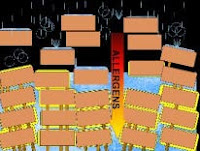


A broken skin barrier4: Dust mites and bacteria


A broken barrier lets allergens enter the skin easily.

Germs and more irritants then lead to an eczema flare.


How to protect your weaker, eczema prone, skin barrier


The report also confirm the importance of treating eczema much earlier in the cycle rather than waiting for a flare to occur.

The Eczema Control Plan, endorsed by the Eczema Association of Australasia Inc. (EAA), identifies and promotes understanding of the three stages of eczema - clear skin, first itch and redness and full flare.

President of the EAA and long-term eczema sufferer, Ms Cheryl Talent said, that if followed correctly, this plan empowers people to control their eczema and reduce their eczema flares by half.

The Eczema Control Plan allows patients to follow a simple, three step treatment regimen as prescribed by their doctor and includes:

# step 1 - use of a daily moisturiser when skin is clear

# step 2 - use of non-steroidal creams to control eczema at the first signs of symptoms and just after a major flare

# step 3 - use of steroid creams or ointments during a severe eczema flare.

To me, it's plain simple to follow and would like to suggest you to write it on a piece of paper, and stick it to the place you often visit - on your work desk, on the fridge, etc. I'd suggest my wife to try this, too.

Tiny cracks in skin barrier key to developing eczema full article


Ivan Widjaya
Skin barrier protector

Eczema Flare Ups after Days of Terrible Weather

Tuesday, 18 March 2008

Weather really come into play in new eczema patch creation :)

Especially where my wife and I live, bad weathers are really THAT bad. Does weather really that influentials?

In my experience, yes it does. The problem with all of us with eczema is that our body is built based on our early ages environmental conditions. To refer, an eczema research has shown that exposure to bacterial toxin in the home may protect infants from eczema.

Based on the research, I assume that during our early stages of life, our body build some patterns in the immune system that are 'memorised'. In later stages of life, the immune system 'remember' to protect our body from harms that was caused in the past. Therefore, a change in the exposure pattern will effect the immune system.

I have no evidence whatsoever regarding this, but I use this logic to understand why today's global warming and rapid climate changes are one of the biggest factors contributing to eczema flare ups frequency. Even some people I know are new eczema sufferers recently!

Then, what can we do about it? Protect yourself not only from irritants, but also from the weather! There's one thing that I can suggest you to do as a habit - AVOID HAVING A DRY SKIN - bathe less often during rapid weather changes, or if you insist to bathe, please use moisturising creams or soap with moisturisers in order to protect you from dry skin.

Hopefully this helps.

Never Too Old to Get Eczema - Real Story

Thursday, 13 March 2008

"I have always been aware of chemicals causing health problems but never realised just how they can creep up on you and cause a problem which seemingly doesn't have an easy answer.

At 52 I started a part time job which involved farm work and relief milking of a dairy herd every second weekend. For the first couple of months everything was fine then I started to notice red raw areas starting on my face below my nose and each side of my mouth. I put this down to being exposed to cold drying wind and rubbed cream into them from the chemist.

At first there was a some relief but then the problem became much worse. In desperation I saw the local doctor and he gave me steroid cream to clear it up which worked very well and the problem seemed to disappear. Then two weeks later it was back again and another cycle of steroid cream was started again. I hate having to use drugs that just treat the symptoms so started to carefully appraise my exposure to chemicals and what may have been the cause of the problem.

I had been told by a friend that eczema was often associated with exposure to sodium hydroxide so I had a careful look at the chemicals in the dairy which were used for cleaning the equipment. Sure enough sodium hydroxide. Although I wore protective gloves and clothing, steam coming off the hot water was obviously causing an allergic reaction with my skin hence the eczema. I had also been warned by my friend that sodium hydroxide was found in common personal care products too and once sensitized to this chemical there would be an ongoing problem no matter where the contact came from.

To my horror I found I was brushing my teeth with a toothpaste which listed sodium hydroxide as one of the chemicals about halfway down the list of ingredients. Then I found it listed in the shampoo I was using as well and it was in common soap. To further compound the problem both the toothpaste and the shampoo contained sodium lauryl sulphate which I now know is just as much a culprit as sodium hydroxide in causing eczema and skin problems.

Well to cut a long story short within two weeks of stopping the use of the products with both the above chemicals in them and using 100% synthetic chemical free certified organic products the flaking scalp I used to experience and the eczema on my face completely cleared and as long as I am careful in the dairy and leave the room immediately when the steam is heavy I don't have any problem at all with ongoing eczema.

It makes me very angry to think manufacturers don't care about the toxic effects of repeated exposure to these so called 'safe' chemicals"

Bill H. Cornwall

Source: http://health-report.co.uk

Eczema Club note: Well, Bill says it all - our everyday products could be triggers to your eczema. Please be sure to read and find out the nature of the ingredients listed on your everyday products, especially household items (because we tend to overlook 'save' household item, such as organic mouthwash, etc, etc) - an 'organic' claim doesn't mean it's save. Please consult your doctor regarding this issue.

Does Spirituality Play a Big Role in Managing Your Eczema?

Monday, 10 March 2008

To my family and I, spirituality in managing your eczema is very critical. You shall never underestimate the power of faith.

Spirituality does help us to get through the rough times - put things in perspective. And, the more you put your hands off you and your eczema (literally and figuratively) and devote to your Higher Being, you will see INSTANT relieve.

I am a Christian - I am devoted to the Almighty God, Jesus Christ. Although I seek what a man could think of the best solutions for my family conditions - mainstream medication and herbal treatment of eczema - JC offers my family and I the BEST solution - release your hands from the wheel of your life, and He will take control to do what's best for us. That's how faith works, and that's how you break the eczema breakout cycle.

No matter what your spirituality paths are, you have to start devoting now, and release your grasp of your eczema conditions, and do what's best but often forgotten and underestimated - stop trying to cure your eczema for a while, and start praying or meditating!

If it works for my family and I, it could very well works for you, too!

Eczema at Work

Tuesday, 4 March 2008

Working while living with eczema can be difficult, especially when the way you look affects your confidence and your physical discomfort makes even the smallest of tasks like typing or washing an ordeal. The following fact sheet highlights some of the issues surrounding eczema at work and offers guidelines towards making life more comfortable.

-- Contact dermatitis or eczema is the most common type of work related skin disease and affects 9% of people in the work place1

-- It can lead to extensive time off work and loss of earnings

-- Contact describes eczema that develops after direct contact with irritants or allergens in the environment

-- Irritant contact dermatitis usually develops after prolonged contact with substances that de-grease and irritate the skin i.e. detergents, engine oils, hair dyes and bleaches among many others

-- Allergic contact dermatitis results from a specific sensitivity or allergy to a material such as rubber or nickel

-- Patch tests are used to detect allergic contact dermatitis

-- A patch test involves having dilute forms of suspected allergens placed on the skin of the back. The patches are checked for a reaction at 48 and 96 hours. If a reaction has occurred the results are graded according to the severity of the reaction

-- Maintaining an everyday skincare routine at work is vital. This can involve regularly applying moisturisers (emollients), avoiding soap which can dry skin and contact with substances that can irritate the skin

-- In jobs where there is a lot of hand washing or contact with irritants, emollients should also be available to staff

-- Soap containing perfumes and colours can be drying and potentially irritating. A soap substitute or cleansing bar can be effective

-- Water on its own can also have a drying affect. Emollients may double as a soap substitute.

-- Paper towels can irritate the skin and hot air dryers may lead to excessive dryness

-- Eczema cases can be affected by extremes and changes in temperature. Avoidance of direct source of heat or a window (sunlight) is important

-- Air conditioning can dry the skin and become a source of irritation. Workplaces should be adequately ventilated to reduce further exposure to irritants and allergens

-- In industrial situations, the hands and forearms are most at risk. The use of proper gloves, coupled with a high standard of hygiene can minimise contact with substances

-- Regular washing and changing of gloves will help prevent and reduce contact with potential allergens or irritants

-- VDU screens may cause dust circulation and a dry atmosphere. A saucer of water on the desk can help reduce dryness

-- Paperwork should be filed as soon as possible and not allowed to sit and gather dust. If a task involves a lot of dust, wearing a pair of cotton gloves may help

-- Cigarette smoke can irritate some people's skin - a smokeless workplace is vital

-- The stress of starting a new job or other work-related pressures could cause eczema to flare up

-- For information relating to careers for people with eczema contact: Employment Medical Advisory Service (EMAS) of the Health and Safety Executive (HSE) which will be found under the HSE in the telephone directory

Career areas which could cause a flare up:


-Hairdressing: frequently putting hands in hot soapy water and handling hair colorants, bleaches, perm solutions etc

-Kitchen work: contact with juices of raw fruit and vegetables together with frequent hand washing and use of detergents

-Engineering or motor vehicle repair: contact with oils and coolants etc

-Patient care of any kind: frequent hand washing, complications of infections

-Animal handling: animal dander, hand washing

-Building work: contact with cement can cause irritation in some cases and allergy to chromate is common

-Work with adhesives containing cyanoacrylates and epoxy resins, both of which can cause allergic contact eczema

Reference: http://www.medicalnewstoday.com

About the National Eczema Society
Get More Information on Eczema Cream for Itchy, Inflamed, Red, Dry and Flaky Skin

Eczema Self Care - Tips to Reduce Itching and Soothe Inflamed Skin

Tuesday, 26 February 2008

To help reduce itching and soothe inflamed skin, try these self-care measures:

  • Try to identify and avoid triggers that worsen the inflammation
    Rapid changes of temperature, sweating and stress can worsen the condition. Avoid direct contact with wool products, such as rugs, bedding and clothes, as well as harsh soaps and detergents.

  • Apply an anti-itch cream or calamine lotion to the affected area
    A nonprescription hydrocortisone cream, containing at least 1 percent hydrocortisone, can temporarily relieve the itch. A nonprescription oral antihistamine, such as diphenhydramine (Benadryl, others), may be helpful if itching is severe.

  • Avoid scratching whenever possible
    Cover the itchy area if you can't keep from scratching it. Trim nails and wear gloves at night.

  • Apply cool, wet compresses
    Covering the affected area with bandages and dressings can help protect the skin and prevent scratching.

  • Take a comfortably cool bath
    Sprinkle the bath water with baking soda, uncooked oatmeal or colloidal oatmeal — a finely ground oatmeal that is made for the bathtub (Aveeno, others).

  • Choose mild soaps without dyes or perfumes
    Be sure to rinse the soap completely off your body.

  • Moisturize your skin
    Use an oil or cream to seal in moisture while your skin is still damp from a bath or shower. Pay special attention to your legs, arms, back and the sides of your body. If your skin is already dry, consider using a lubricating cream.

  • Use a humidifier
    Hot, dry indoor air can parch sensitive skin and worsen itching and flaking. A portable home humidifier or one attached to your furnace adds moisture to the air inside your home. Portable humidifiers come in many varieties. Choose one that meets your budget and any special needs. And be sure to keep your humidifier clean to ward off bacteria and fungi.

  • Wear cool, smooth-textured cotton clothing
    Avoid clothing that's rough, tight, scratchy or made from wool. This will help you avoid irritation. Also, wear appropriate clothing in hot weather or during exercise to prevent excessive sweating.

© 1998-2008 Mayo Foundation for Medical Education and Research. All rights reserved.

Manage your eczema with Natural Eczema Cream for Itchy, Inflamed, Red, Dry and Flaky Skin

The Eczema Condition: Is Your Skin Too Clean?

Tuesday, 19 February 2008

Americans almost seem obsessed with cleanliness. A walk into the local grocery store or department store reveals one or more aisles of products related to personal hygiene. Shoppers often have a wide selection of choices of soaps, facial washes, scrubs, and shampoos. Is it possible for us to be "too clean"?

The outer layer of the skin acts a barrier against potentially dangerous organisms. Normally, the skin maintains a delicate balance of water, fats, pH, and turnover of skin cells. Washing removes the oils in the skin, upsetting the moisture balance, and compromising the protective barrier properties. It's particularly a problem in the cold, dry months of winter. Eventually, too-frequent washing can lead to chronic damage to the outer layer of the skin and cause the development of rough, dry skin and conditions, such as irritant contact dermatitis or eczema.

Ironically, while washing is meant to remove germs, research shows dry, damaged skin actually harbors more disease-causing GERMS than healthy skin. In addition, in people with damaged skin, washing is less effective in removing germs. One study found the number of organisms spread by nurses who wash frequently with antimicrobial soap actually increased over time.

There are other reasons to be concerned about over-cleanliness. Not all bacteria are bad. But personal cleaning products don't distinguish between the good and the bad? Washing it all away. In addition, overly clean environments may not be good for infants and children. We need some exposure to GERMS for our immune system to develop antibodies and to learn how to respond to an infection. Some researchers speculate the increase in asthma and other immunological diseases may be related to decreased exposure to GERMS and poorly developed immune systems.

There are some small steps that can be taken to reduce the risk of skin problems from personal hygiene routines. Try to limit washing to one bath or shower a day. Use a mild cleanser and warm (not hot) water. Pat dry the skin with a soft towel. Use a moisturizer immediately after washing to seal moisture in the skin and reduce further moisture loss.

Article source: http://eczematreatment.blogspot.com

Is your skin too clean? Care yours the right way with ZENMED DermCare System


Eczema Club reader review

"You have a great site with honest evaluation of dangerous herbal products plus the good advice. Many will be helped by your site if they apply what you have posted."
- Muryal, nanas-cbmall.com

"Great looking blog and a good little niche to help fellow sufferers. The laout is easy on the eye and the navigation a breeze. I liked the article on water softeners. Its great that you provide your readers with information like ongoing studies and research. As for you question, I really don't know of any way you can improve your blog. It looks great to me. I wish you all the best."
- Linda, teendrugaddiction.blogspot.com